Whistleblower Testimony
Gary Marzolf serves as a key whistleblower and active witness following a patient suicide he witnessed while at the Buffalo Psychiatric Center (BPC). His testimony uncovered a pattern of systemic negligence and covered-up deaths, triggering a multi-agency investigation by the NYS Justice Center, the NYS Health Department, and CMS that nearly resulted in the facility’s closure. Because of his role in exposing these institutional failures, Mr. Marzolf is currently being targeted by administrators, resulting in his continued, unjust detention.
Active Civil Litigation & Legal Counsel
A formal civil suit has been filed regarding these institutional betrayals. For inquiries, contact:
- Criminal Defense (Josh T. Eagan): 716-531-1117 / 716-218-8249
- Civil Litigation (Fanizzi and Barr): 716-284-8888
This video documents the profound systemic failures and institutional betrayals inherent in the New York State inpatient psychiatric system as exemplified by the case of Gary Marzolf. It highlights the catastrophic breach of duty and substantiated sexual exploitation uncovered by a 2023 New York State Justice Center investigation, which revealed how the very institutions charged with healing instead inflicted "serious and protracted impairment".
Beyond systemic oversight, the presentation explores the severe iatrogenic harm resulting from forced medication regimens. It challenges a psychiatric model that frequently ignores the physical toll of neurotoxins and pathologizes the rational hypervigilance of a complex trauma survivor. This record serves as a vital call for immediate reform and the implementation of truly trauma-informed care.
Justice Center Findings
The 2023 investigation by the New York State Justice Center reveals a catastrophic breakdown in the custodial duty of care within the state's psychiatric system. The findings substantiate that Mr. Marzolf was a victim of sexual exploitation and neglect by facility staff, a betrayal that directly precipitated a major clinical relapse and subsequent re-commitment. This investigation documents a pattern of boundary violations where professional figures exploited Mr. Marzolf's institutional vulnerability.
The system has continued to exploit and traumatize Mr. Marzolf through a coercive model that prioritizes medication compliance over the resolution of foundational developmental trauma. Despite his documented history of interpersonal abuse, the state’s approach has consistently pathologized his rational responses to institutional mistreatment while ignoring the iatrogenic injuries resulting from his treatment regimen.
View Full Investigation Report (PDF)Foundational Trauma
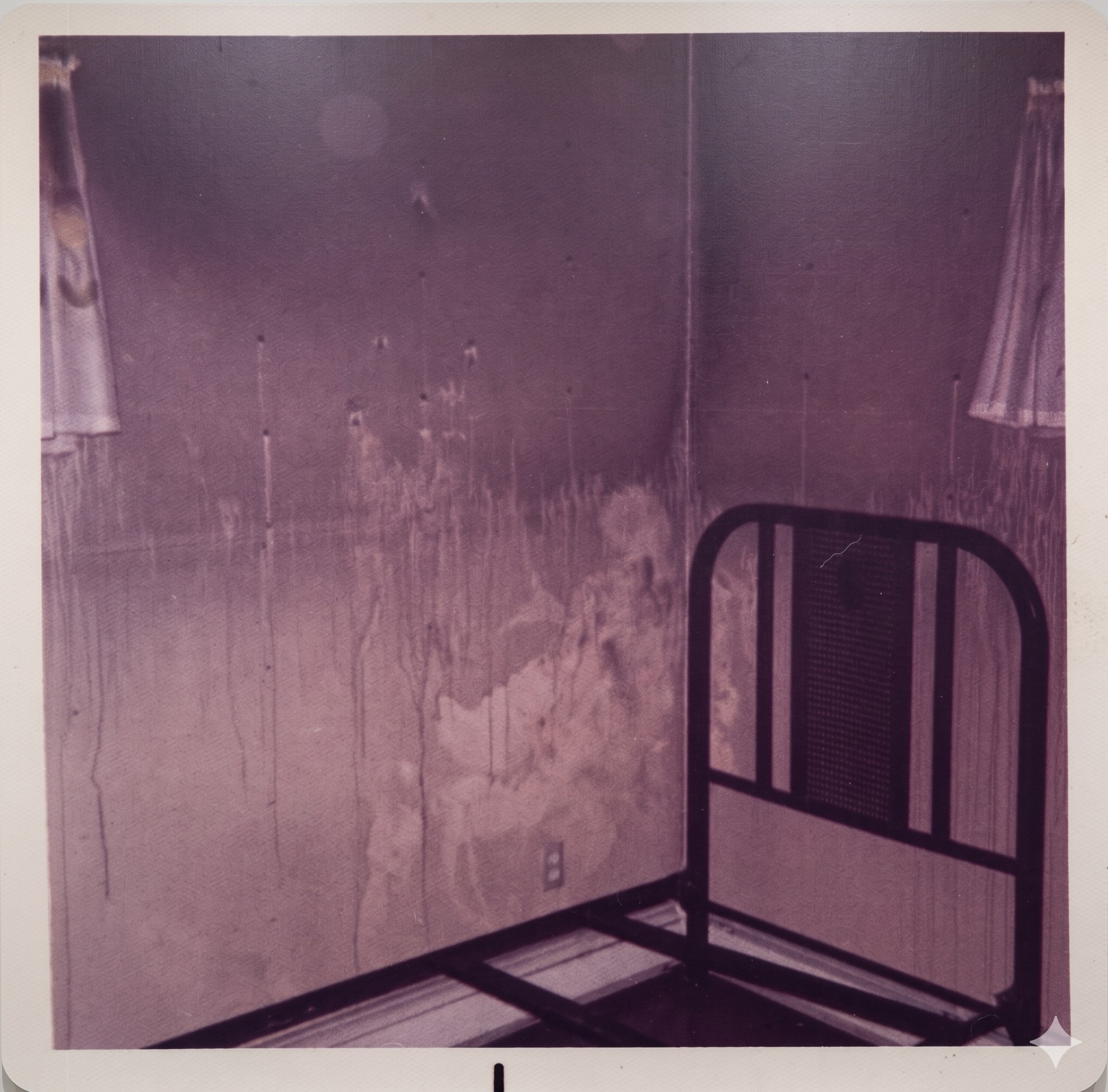
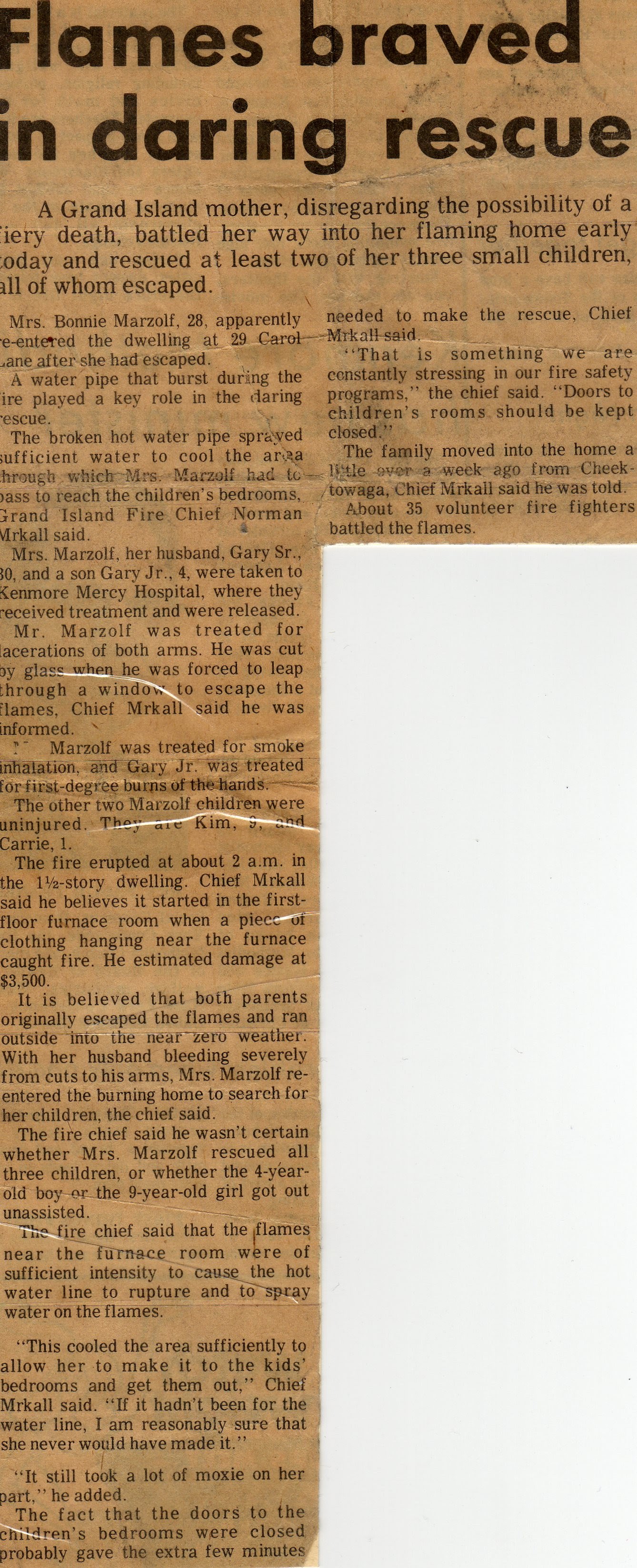
At just four years old, a critical window for neurodevelopmental anchoring, Gary was pulled unresponsive and clinically near death from a catastrophic house fire on Grand Island. This foundational psychological wound established a lifetime of trauma by hardwiring the brain’s survival circuitry—the amygdala and limbic system—into a state of permanent high alert.
Over the decades, this sets up a destructive cycle: future stressors are not processed as isolated incidents, but as echoes of that original life-threatening fire. In institutional settings, these enduring survival mechanisms are often pathologized as "psychiatric symptoms," when they are, in reality, the body’s sophisticated attempt to protect a survivor from a world that once turned to ash.
Iatrogenic Harm
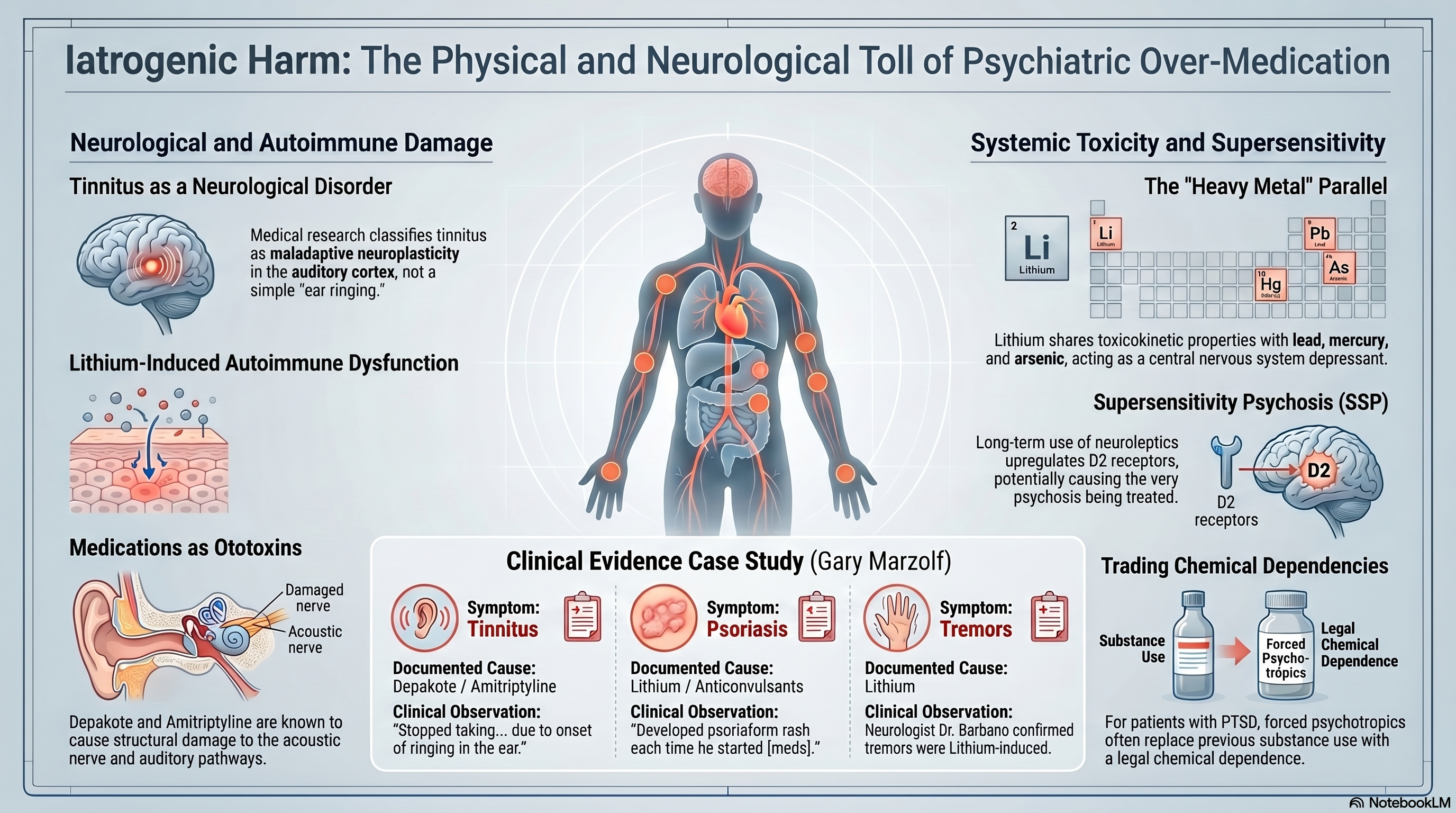
This infographic serves as a clinical record of the compounding physical injuries sustained by Gary Marzolf throughout decades of institutional psychiatric confinement. Rather than receiving recovery-focused care, Mr. Marzolf was absorbed into a model that prioritized chemical restraint. This established a cycle where his rational responses to trauma were pathologized and suppressed through heavy, non-consensual medication regimens.
The data illustrates the severe iatrogenic—or doctor-induced—harm that has resulted from this prolonged pharmacological burden. Documentation reveals that enforced medications have left Mr. Marzolf with permanent neurological and autoimmune damage, most notably chronic tinnitus and lithium-induced psoriasis. This infographic stands as evidence of the "toxic load" placed on a human body when systemic processes override patient autonomy.
Professional Misconduct Logs
The behavior of a clinician engaging in personal phone calls with a former patient while they are incarcerated represents a profound breach of professional ethics. In her role as a counselor, Brenda Martin was bound by the legal and ethical duty to maintain "therapeutic boundaries." By initiating contact during Mr. Marzolf’s incarceration, she transformed a regulated, power-balanced relationship into an unregulated personal connection, exploiting his institutional vulnerability.
The impropriety is significantly worsened by the disclosure of personal information regarding her own life. For a patient with a history of sexual and emotional abuse from women in authority, these calls mirror predatory grooming patterns. This behavior is iatrogenic and triggering, replicating the dynamics of past trauma and compromising the patient’s psychological safety.